Play Style System
What is Play Style (Gipung)?
In Baduk (Go) and Gomoku (Omok), a player's distinct tactical character and board temperament is known as their Gipung (Play Style). EGO ARENA pairs Stone Flick (Alkkagi) and Gomoku with 16 personality-inspired play styles, so a single test result shapes your physical stone parameters, tactical tendencies, and dedicated Joseon-era theme music.
Entertainment Gameplay Notice
The play style assessment in EGO ARENA is a purely entertaining game feature created to make stone duels more varied and enjoyable. It is not an academic psychological assessment or medical diagnostic tool, so please enjoy it casually.
What the Four Axes Change in Stone Flick
Your play style is shaped by four personality axes (E/I, S/N, T/F, J/P), mapped directly into in-game physical attributes through mathematical formulas.
1. Social Focus: Outgoing (E) vs Calm (I) — Taunt and Composure
- E (Outgoing): Grants an active "Taunt" skill usable once per match. Launching while Taunt is active increases your opponent's aim jitter error by up to 80% on their following shot.
- I (Calm): Possesses natural "Taunt Resistance." Offsets the aim jitter increase caused by opponent E taunts, helping you preserve steady aim under pressure.
2. Approach: Precision (S) vs Intuition (N) — Accurate Aim and Explosive Power
- S (Precision): Base aim jitter error is reduced by up to 50%, making minute angle adjustments easier, and your aim trajectory line extends up to 50% longer for sharp long-range targeting.
- N (Intuition): Maximum launch power is boosted by up to 10%, and an intuitive "Multi-Out" hint reveals potential chain-reaction targets. In exchange, base aim jitter increases slightly (up to 20%).
3. Mindset: Composed (T) vs Momentum (F) — Cool Equanimity and Morale
- T (Composed): Momentum swings are dampened by up to 60%. Even after conceding stones or falling behind, maintains steady composure and consistent shot feel.
- F (Momentum): Morale fluctuates sensitively with match flow (momentum swings boosted by up to 60%). Scoring raises momentum, decreasing jitter and adding power; losing stones dampens momentum and can shake aiming. (Momentum ranges from -1 to +1; peak momentum decreases jitter by up to 40% and boosts power by 5%).
4. Pacing: Planned (J) vs Adaptive (P) — Early Speed and Crisis Surge
- J (Planned): Aim jitter is reduced by up to 50% during the opening phase (first 3 shots). Excellent for textbook openings and quick initiative, but jitter increases slightly by 15% in prolonged endgame play past the 4th shot.
- P (Adaptive): When trailing by 2 or more stones, "Crisis Surge" activates, cutting jitter by up to 50% and boosting power by 5%. In standard even situations, aim jitter is slightly higher by 10%.
How the Four Axes Manifest in Gomoku (Omok)
Your Play Style Card also reflects how each character approaches reading and positioning in Gomoku:
- E (Outgoing) / I (Calm): Proactive attackers who extend open threes early to seize the initiative (E) versus solid defenders who sever opponent connections first and counterattack (I).
- S (Precision) / N (Intuition): Methodical readers who calculate immediate open threes, fours, and forbidden points (S) versus creative strategists who weave diagonal setups across the board for a Four-Three fork (N).
- T (Composed) / F (Momentum): Cool-headed analysts who find optimal defensive intersections under pressure (T) versus momentum-driven players who press continuous attacking sequences (F).
- J (Planned) / P (Adaptive): Structured architects who build predetermined Four-Three nets from the opening (J) versus flexible tacticians who pivot attack lines in response to the opponent (P).
Balanced Design with Paired Strengths and Weaknesses
The play style system in EGO ARENA is mathematically balanced so that every advantage is paired with an opposing drawback, ensuring no single style dominates unconditionally.
- Even if a player selects 100% of an extreme pole on an axis, an overpowered character does not result. For example, maximizing N power expands aim jitter, while securing an immaculate opening with J makes the stone jittery in late-game exchanges.
- Dual Styles: When the gap between two opposing poles on an axis is under 20 percentage points (intensity coefficient < 0.2), that axis is categorized as "Dual." Before each match, players can freely toggle the active pole to suit their Black/White side or chosen strategy.
Three Ways to Determine Your Style
Choose the method that best matches your preference; once saved, your Style Card is shared across all board games on the site:
- 1-Minute Quick Test (12 Questions): A 3-question-per-axis survey that pinpoints your play style in under a minute.
- Full Test (40 Questions): A thorough 10-question-per-axis assessment measuring your tendencies and axis intensities in detail.
- Direct Entry: If you already know your external personality test profile, directly enter your 4-letter code and axis percentages to jump straight into the arena.
Post-Match "This Match's Style" Analysis
When a match concludes, your actual metrics are analyzed to calculate your tactical play style for that specific battle:
- E / I Assessment: Evaluated based on active Taunt usage and consecutive hit streaks.
- S / N Assessment: Evaluated based on average shot power and frequency of risky long-range gambits.
- T / F Assessment: Evaluated based on the number of own stones lost and opponent stones knocked out.
- J / P Assessment: Evaluated based on aiming duration per shot (deliberate vs rapid).
Comparing your innate personality profile against your actual tactical performance in a heated duel offers fascinating insights.
Explore the 16 Play Styles
Visit each style page to view portraits, historical occupations, strengths, weaknesses, and original theme music.
 ESTJVanguard ArchitectCapital Defense Commander (Daejang)
 ESTPLightning GamblerPolice Bureau Investigator (Damo)
 ESFJCheering MaestroTroupe Lead Percussionist (Sangsoe)
 ESFPFestival StrikerMask Dance Performer (Talchum)
 ENTJBoard PioneerMerchant Caravan Leader (Yeohaengsu)
 ENTPNook ExplorerRoyal Observatory Inventor
 ENFJWave GuideVillage School Master (Hunjang)
 ENFPSpark PerformerHaegeum Musician
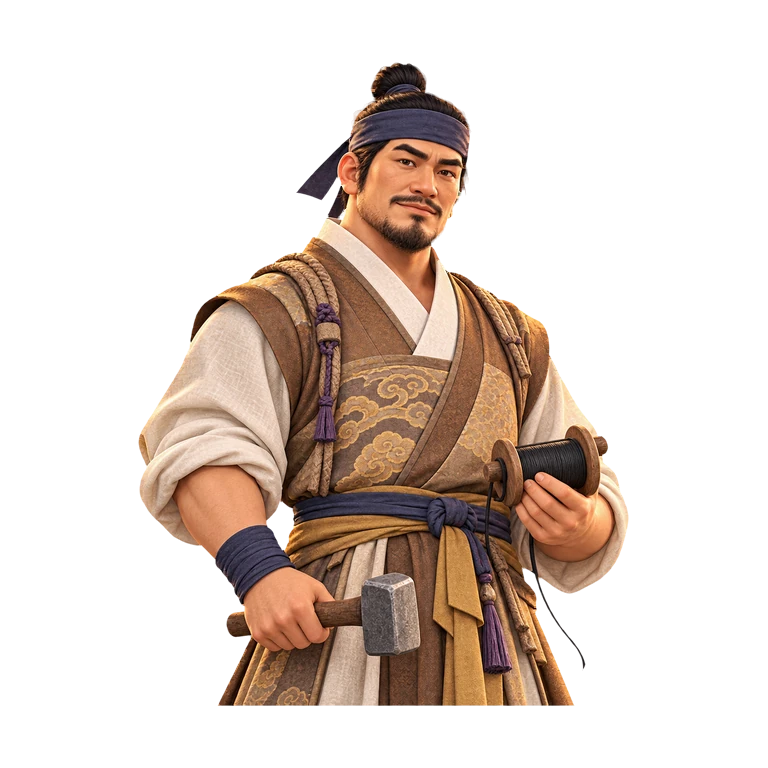 ISTJSilent BuilderRoyal Fortress Master Builder (Dopyeonsu)
 ISTPSilent AnglerRiverside Hermit Archer
 ISFJGentle GatekeeperPalace Gate Guardian (Sumunjang)
 ISFPTranquil StrollerRoyal Academy Court Painter (Hwawon)
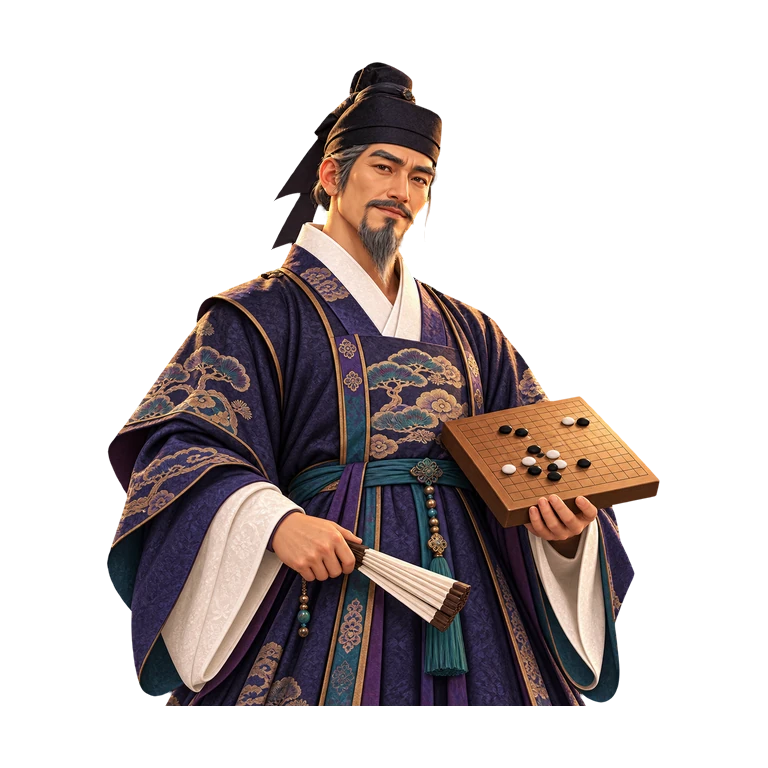 INTJDeep TacticianBaduk Grandmaster (Guksu)
 INTPHidden Route SeekerRoyal Observatory Astronomer
 INFJEmpathic StrategistRoyal Court Strategist
 INFPWandering DreamerWandering Poet